
The fight scene is the point where campaign preparation becomes immediate. The army the player moved across the map becomes a finite roster, and the battle asks where, not merely whether, to commit it.
A battlefield divided into fronts
The current battlefield uses three mirrored lanes between player and enemy bases. Each lane can hold squads, defensive rows and, in siege configurations, a fortified gate. The top display tracks total strength and the number of bases each side must destroy.
Dividing the battle into lanes makes the situation readable on a phone. It also creates simultaneous problems. A strong push in one lane may leave another exposed. Sending every veteran squad toward the first opening can win ground quickly while creating a counterattack the player no longer has reserves to answer.
Units counter one another
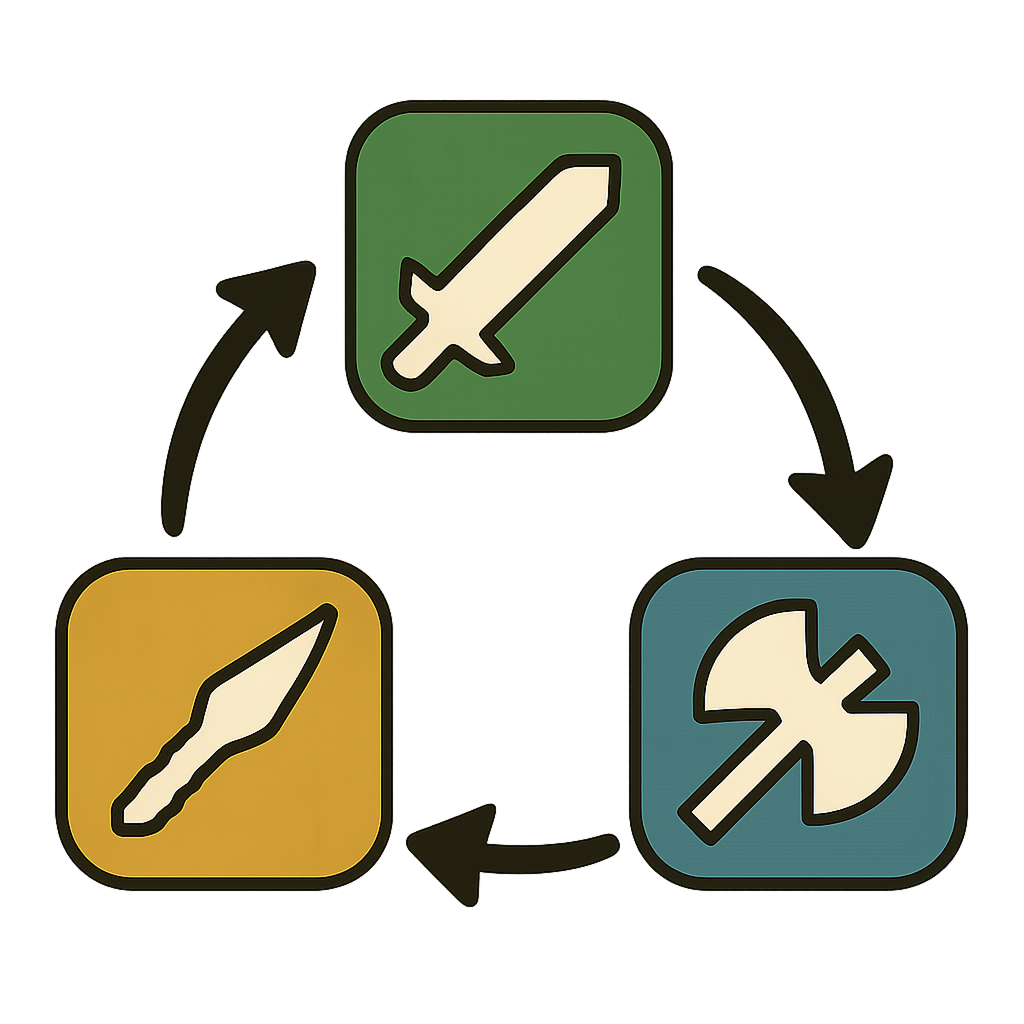
Spearmen defeat axemen, axemen defeat swordsmen and swordsmen defeat spearmen. Archers attack from range and trade more evenly, but they depend on a frontline. If melee protection disappears, ranged squads creep forward and become vulnerable.
The counter cycle is intentionally small enough to learn. The tactical depth comes from timing and position: recognizing the opposing formation, selecting the right unit level and squad size, then deploying it into a lane where it can actually reach the intended target.
Each deployment removes soldiers from the shared battle roster. Unit cards show what remains by type and level, so spending the strongest troops early is a visible choice rather than an invisible efficiency calculation.
Attack, Defend and Retreat
Lane orders change squad behavior. Defending units occupy reserved rows near their base instead of immediately advancing. Attack sends the front forward. Retreat pulls friendly squads back once they can disengage.
Retreat is central to the connection with the campaign. Squads that reach safety return to the roster. A player can abandon a failing lane, preserve experienced soldiers and accept a damaged base rather than turning every fight into total destruction. After a base falls, the lane closes and surviving forces are ordered away from the lost position.
The campaign question inside every battle: how much of this army should be risked for this province?
Breaking bases and fighting sieges
When defenders are cleared, melee squads assault the opposing base with torches while archers can bombard from range. Victory comes from destroying the required number of bases, not necessarily every enemy soldier.
Siege battles add walls and gates with much higher health. Gates open when squads deploy and close when the entrance is clear, creating windows where pressure and reinforcement timing matter. Damage is communicated through health bars, darkening structures and smoke so a failing position can be recognized without reading small numbers.
Limited battlefield support
Arrow Barrage is the first implemented lane power. It consumes a limited charge and punishes enemies that have stacked too densely. The restriction is important: support should create a timed decision, not replace unit matchups. Additional powers can follow the same rule while offering different kinds of intervention.
What we are testing
Battle pacing, AI reaction speed, formation spacing and visual performance are under continuous refinement. The fight scene pools units, projectiles, shadows and visual effects because stable frame time is part of tactical clarity on mobile hardware.
The current build keeps three lanes while allowing encounters to change other rules. Field battles, ambushes, sieges and settlements share the same core system, with settings for defense rows, fortification, roster size, power charges, the attacker's role and whether two or three bases are required for victory.
The aim is not a miniature campaign map inside every encounter. It is a focused tactical resolution that remembers the army before the battle and returns meaningful survivors and losses afterward.